









Barbara Bako, Bangkok.
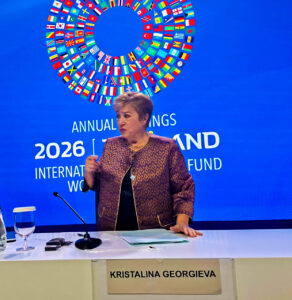
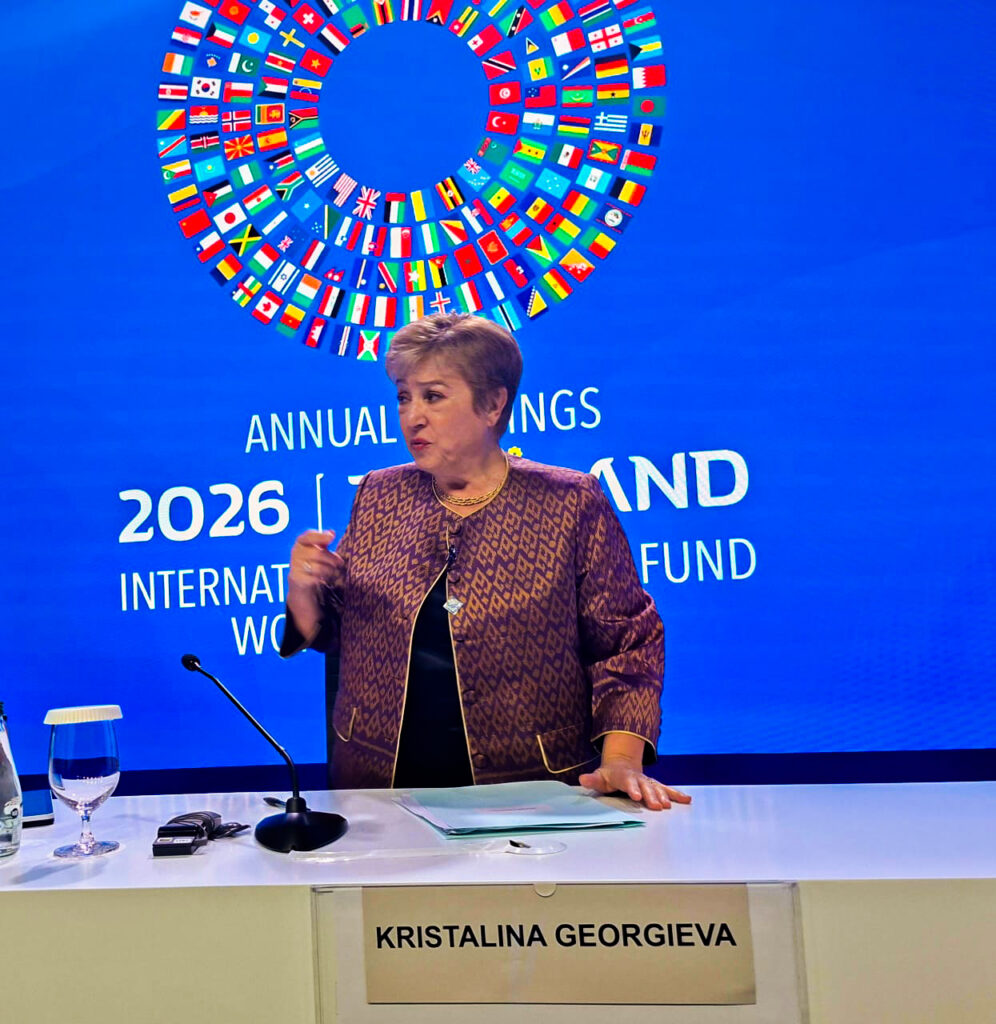
International Monetary Fund (IMF) Managing Director Kristalina Georgieva has warned that the global economy faces mounting risks from rising debt, persistent inflationary pressures and growing dependence on artificial intelligence (AI), urging governments to strengthen their fiscal positions before further shocks emerge.
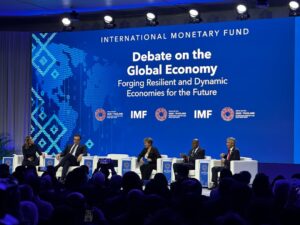
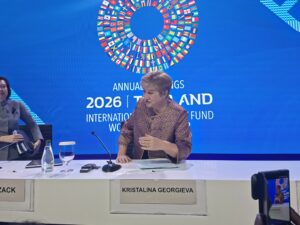
Georgieva issued the warning at a session of the IMF-World Bank Group Annual Meetings in Bangkok, Thailand, where she said the global economy had withstood multiple shocks but was running out of the buffers needed to sustain growth.
The IMF projected global growth of 3.1 per cent in 2026, but Georgieva said the headline figure concealed widening differences among economies.
Countries benefiting from AI investment were performing better than those affected by conflicts, higher energy costs and limited participation in the AI supply chain.
“Growth has been resilient, but this resilience is on a fragile foundation today,” she said, warning policymakers against taking the relative stability of the global economy for granted.
According to Georgieva, a small group of economies, including the United States, China, India and countries integrated into the AI value chain, were benefiting from increased investment in the technology.
Thailand and South Korea were among the economies gaining from their participation in the AI supply chain.
However, Georgieva said countries affected by war and those importing fuel without benefiting significantly from AI-related investment faced a more difficult outlook.
She warned that this divergence could deepen economic inequalities as investment and productivity gains became increasingly concentrated in a limited number of economies.
She also identified rising energy and food prices as major risks, noting that persistent inflation could force central banks to maintain tighter monetary policies even as governments faced mounting debt-servicing costs.
Higher interest rates, she said, could further increase borrowing costs for countries already struggling with elevated debt and fiscal deficits.
Another concern was the global economy’s growing dependence on AI as a major driver of investment and growth.
“The most important one is artificial intelligence,” Georgieva said, describing an economy increasingly dependent on a single growth engine while other sectors remained comparatively weak.
She cautioned that excessive enthusiasm about the technology could create risks if anticipated benefits failed to materialise quickly enough, prompting investors to withdraw funding and triggering financial stress.
Citing Amara’s Law, which holds that people tend to overestimate technological benefits in the short term and underestimate them in the long term, she warned that disappointment following inflated expectations could undermine confidence and investment.
Georgieva also raised concerns that AI developments could threaten financial stability if the technology evolved in ways that escaped effective human control.
Against this backdrop, she urged governments to rebuild financial buffers, reduce debt and strengthen their fiscal positions to prepare for further disruptions.
“The world economy has been resilient to multiple shocks, but this resilience is being now depleted,” she said.
The IMF chief stressed that countries needed to restore fiscal discipline and strengthen their capacity to withstand economic disruptions rather than assume the global economy would continue absorbing shocks without serious consequences.
She also called for action to address excessive global economic imbalances, particularly between China and the United States.
Georgieva said China’s relatively weak domestic consumption and strong export performance contrasted with the United States’ low savings, high debt and fiscal deficits.
Some European economies, she added, faced a different challenge, with insufficient investment and weak productivity growth constraining their economic performance.
These imbalances could affect other countries by making it harder for domestic industries to compete and directing capital towards a limited number of destinations, she said.
Despite the risks, Georgieva expressed greater optimism than a year earlier that the imbalances could be resolved, pointing to growing recognition among policymakers that the problem required urgent attention.
She urged governments to undertake structural reforms and address economic vulnerabilities before conditions deteriorated further.
Good production costs money and you can support what we do. Please find our details below👇🏾👇🏾👇🏾 Account name: MARKET ONLINE MEDIA Bank: UBA Acc No: 1026401930.