










Barbara Bako, Bangkok.
Nigeria must embed its economic reforms in laws and strong institutions, maintain policy consistency and protect vulnerable households to sustain investor confidence and deliver lasting economic growth, Finance Minister Taiwo Oyedele has said.
Oyedele said reforms could fail to achieve their objectives if governments did not communicate their benefits clearly, prepare for potential setbacks and maintain policies long enough for businesses and households to adjust.
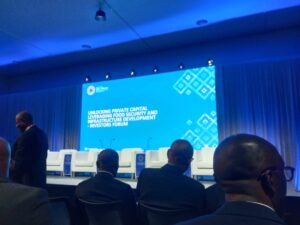
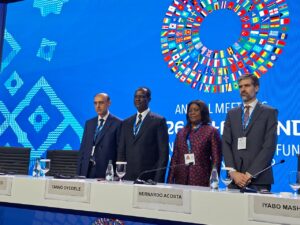
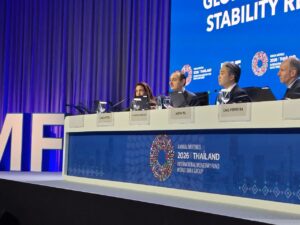
He spoke during the Africa’s Golden Future session at the 2026 IMF-World Bank Group Annual Meetings in Bangkok, Thailand.
The minister identified policy consistency as a critical factor in attracting long-term investment, noting that investors needed to understand the direction of government policies and be confident that the rules would remain predictable.
“Capital has no passports; it goes where it is treated well and stays where it is treated fairly,” he said.
Oyedele said Nigeria’s reform experience underscored the importance of building credibility around economic policies rather than relying on announcements or temporary measures.
He stressed that reforms needed to be embedded in legislation and institutions to ensure their sustainability, adding that governments must remain committed to implementation even when policies involve difficult adjustments.
According to him, the sequencing of reforms also matters, particularly when correcting prices and removing market distortions could initially create volatility.
He said governments should anticipate what could go wrong, undertake scenario planning and communicate clearly with stakeholders to build trust and prepare them for the consequences of policy changes.
Oyedele maintained that the success of reforms depended not only on their economic objectives but also on how governments managed their immediate effects on citizens.
He warned that households facing hunger and poverty could struggle to endure short-term economic pressures while waiting for the promised benefits of reforms.
“People are hungry and they are angry,” he said, emphasising the importance of support systems that enable vulnerable citizens to withstand economic adjustments.
He cited Nigeria’s cash-transfer programme and education financing initiatives as examples of measures intended to support households and students during the reform process.
Oyedele said such interventions were important to ensuring that citizens could continue to meet essential needs while the government pursued broader economic changes.
He also expressed confidence that reforms could be sustained in Nigeria through continued political commitment, institutional support and consistent implementation.
Beyond sustaining policy changes, Oyedele said Nigeria needed to translate its reform agenda into tangible economic outcomes capable of improving livelihoods and attracting productive investment.
He urged governments to focus on creating an environment where private capital could support businesses, expand production and generate employment.
He identified food security and infrastructure as important areas for investment, noting that agricultural production depended on complementary facilities such as storage, processing, transportation and logistics.
Oyedele said Africa possessed considerable investment potential but needed a stronger pipeline of bankable projects and predictable regulatory frameworks to convert opportunities into commercial activity.
He also acknowledged persistent challenges in Nigeria’s electricity sector, where pricing arrangements continued to affect the commercial viability of investments.
He said identifying such constraints and addressing them through practical solutions was necessary to building an environment that could support long-term private investment.
Oyedele challenged investors and governments to measure progress through actual economic activity rather than declarations of intent.
“We are not selling you promises; we are selling you results,” he said.
He added that the success of investment efforts should be reflected in completed transactions, commercialised farms, food delivered and jobs created.
The minister’s remarks underscored the importance of policy credibility, institutional continuity and social protection in ensuring that economic reforms translate into sustainable growth and improved living standards.
Good production costs money and you can support what we do. Please find our details below👇🏾👇🏾👇🏾 Account name: MARKET ONLINE MEDIA Bank: UBA Acc No: 1026401930.