









Barbara Bako, Abuja.
The International Monetary Fund (IMF) has endorsed the Central Bank of Nigeria’s (CBN) recent monetary policy adjustment, saying the move is justified by declining inflation, even as it cautioned that the country’s monetary policy remains restrictive.
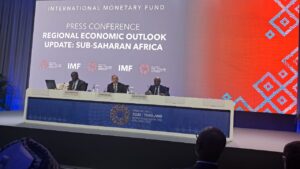
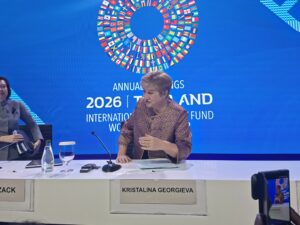
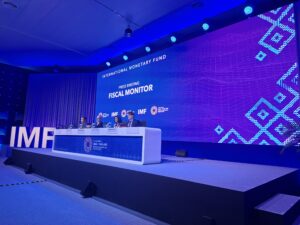
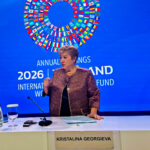
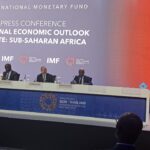
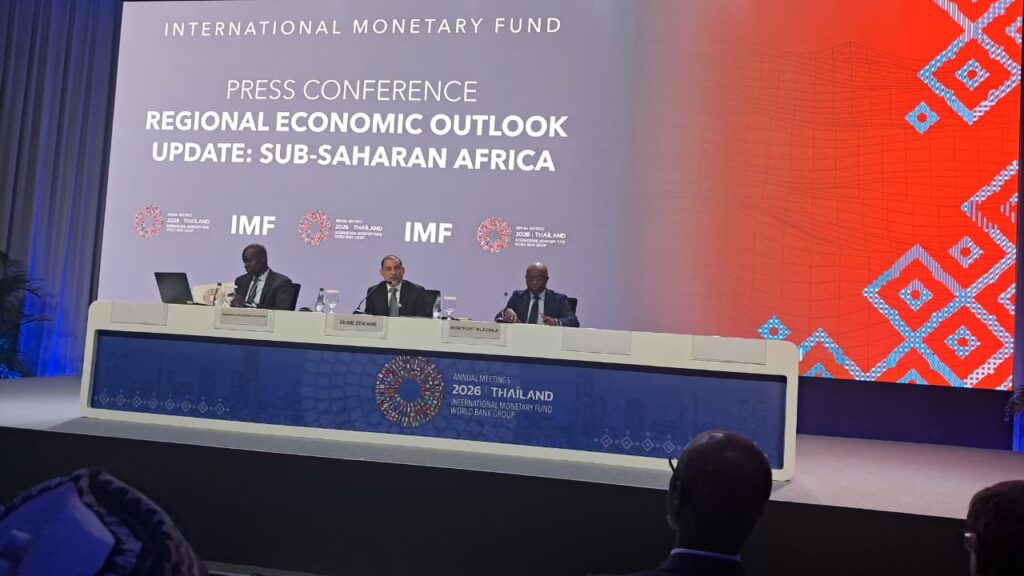
Zeine Zeidane, Director of the IMF’s African Department, gave the assessment at a press briefing during the ongoing IMF/World Bank Annual Meetings in Bangkok, Thailand, where the Fund reviewed economic developments and policy priorities across Africa.
Zeidane explained that progress in curbing inflation had created room for the CBN to adjust its policy settings and lower the real interest rate without moving into an accommodative monetary policy position.
He stressed that the adjustment should not be interpreted as a broad easing of monetary conditions, noting that the overall policy stance remained tight.
“So they decided to normalise somewhat the monetary policy to go to something to lower that real interest rate, which is a component, in our view. It’s the right thing to do, and it’s not easing yet because the stance itself remains a tight stance,” he said.
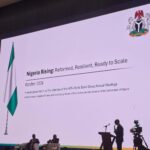
The IMF’s endorsement comes as Nigeria seeks to consolidate the gains from its macroeconomic reforms while strengthening growth, investment and employment prospects.
The Fund also projected Nigeria’s economy to expand by 4.2 per cent this year, up from 4.0 per cent last year, with growth expected to reach 4.3 per cent next year.
Montfort Mlachila, Deputy Director of the IMF’s African Department, attributed the improved outlook partly to higher oil prices, which have boosted foreign exchange earnings and supported the accumulation of external reserves.
He said the stronger external position had also improved liquidity in the economy, while the services sector remained a major driver of economic activity.
“Growth this year is largely driven, apart from benefiting from the very propitious external environment, growth in the economy is mostly driven by services,” Mlachila said.
He added that the substantial decline in inflation since 2025 had contributed to an improvement in Nigeria’s overall macroeconomic conditions and foreign exchange availability.
Despite the more favourable outlook, the IMF warned that sustained growth would depend on the government’s ability to strengthen public finances, address structural bottlenecks and create a more supportive environment for private investment.
Zeidane called for greater mobilisation of non-oil revenue to expand the government’s capacity to fund essential services and infrastructure without relying excessively on oil receipts.
“Our advice for the government has always been to, on one side, mobilise more domestic revenue outside the oil sector to create fiscal space for education, health infrastructure,” he said.
He noted that Nigeria’s large consumer market, youthful entrepreneurial population and technology-driven economy offered considerable investment opportunities, but said governance improvements, a better business environment and stronger economic integration were necessary to unlock the potential.
The IMF official said such reforms would help accelerate economic expansion and generate employment, particularly as Nigeria seeks to translate improved macroeconomic indicators into broader economic benefits.
On energy subsidies, Zeidane urged the government to ensure that savings from subsidy reforms were channelled towards vulnerable households rather than distributed through generalised support that often benefits higher-income groups disproportionately.
He argued that targeted assistance would provide more effective protection for those most affected by the cost of economic adjustment.
“Our advice on subsidies is that if you look at subsidies in general, and in particular energy subsidies, they benefit the wealthiest component of society. So, if you do a certain amount of subsidies, most of it is going to those who don’t need it,” he said.
Zeidane recommended a gradual approach to subsidy withdrawal, accompanied by measures to ensure that the savings reached households most in need of support.
The IMF’s latest Regional Economic Outlook similarly identified foreign exchange market reforms and fuel subsidy reductions in Nigeria and Ethiopia, alongside improvements in fiscal revenue and monetary policy frameworks, as factors supporting greater macroeconomic stability and a stronger foundation for private investment across the region.
The report also highlighted structural reforms in South Africa as part of broader efforts to improve economic stability and investment conditions in Africa.
Good production costs money and you can support what we do. Please find our details below👇🏾👇🏾👇🏾 Account name: MARKET ONLINE MEDIA Bank: UBA Acc No: 1026401930.