









Barbara Bako, Bangkok.
Nigeria has unveiled 65 investment opportunities across key sectors of the economy and promised further reforms in power, agriculture, taxation and business regulation to attract domestic and foreign capital.
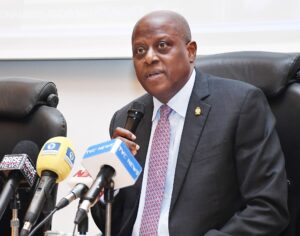
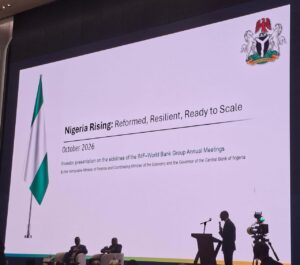
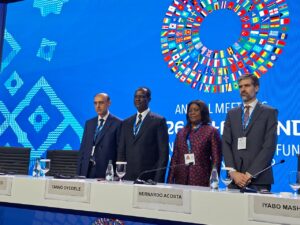
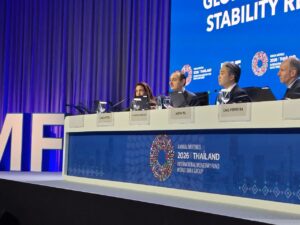
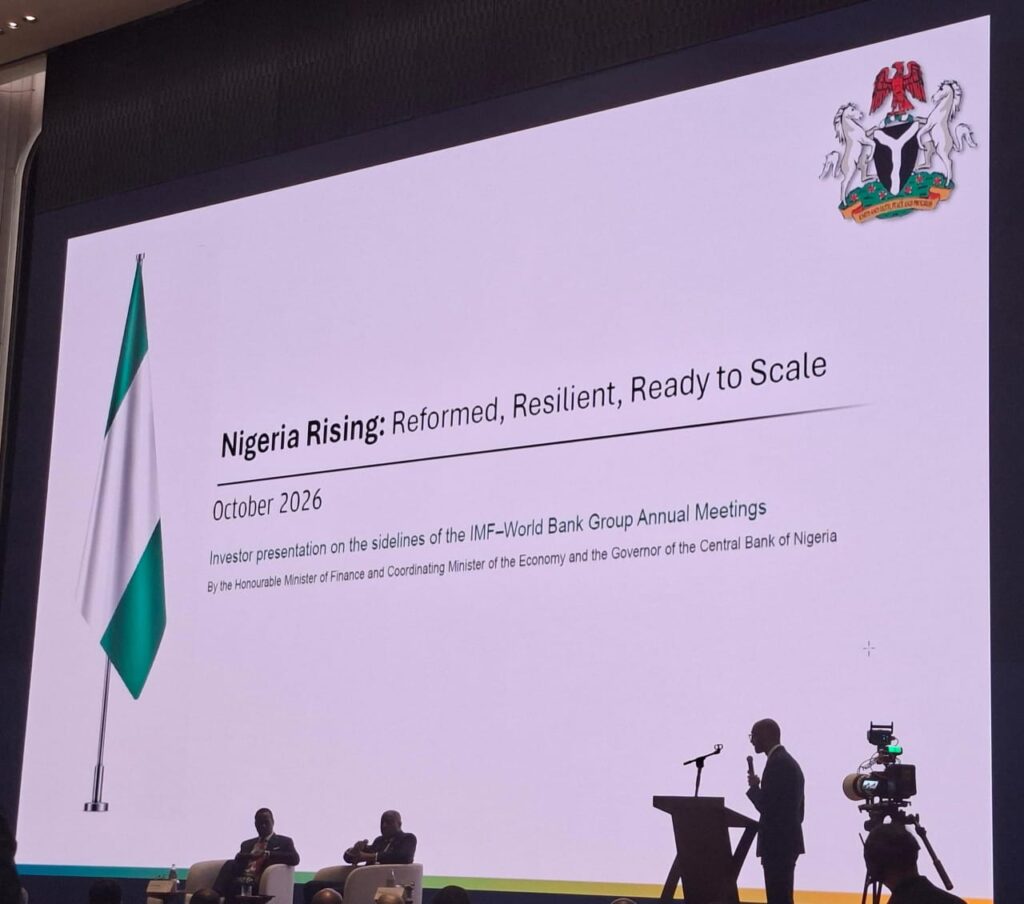
The Minister of Finance and Coordinating Minister of the Economy, Wale Oyedele, and the Governor of the Central Bank of Nigeria (CBN), Olayemi Cardoso, presented the investment opportunities at an investors’ meeting on the sidelines of the IMF-World Bank Group Annual Meetings in Bangkok, Thailand, under the theme, “Nigeria Rising: Reformed, Resilient, Ready to Scale.”
The government said the projects were designed to connect investors with bankable opportunities as Nigeria moves from macroeconomic stabilisation to its next phase of growth, with a focus on job creation, infrastructure development and increased productivity.
A representative of the Nigerian delegation said the 65 transactions had been identified through engagements with federal and state governments, government agencies and private-sector operators.
The projects cover oil and gas, power, transport, maritime, agriculture and agro-processing, manufacturing, mining, technology, healthcare and urban services.
According to the representative, the investment opportunities have been structured to provide details on capital requirements, use of funds, exit routes, credit support and minimum investment thresholds, enabling prospective investors to assess projects and make informed decisions.
Investors were invited to visit a dedicated deal room to engage directly with representatives of government agencies and private-sector businesses, examine the projects and arrange bilateral meetings.
The government said the deal room would be supported by an online platform that would be updated as additional opportunities become available.
Oyedele outlines further reforms
Responding to investors’ questions, Oyedele said the government was committed to sustaining fiscal and monetary coordination to bring inflation down to single digits.
He argued that lower inflation and interest rates would reduce the government’s borrowing costs and create a more favourable environment for private investment.
Oyedele noted that the Naira’s relative stability and appreciation had helped ease inflationary pressures, adding that the government considered price stability a major priority.
He outlined five key areas of reform, including agriculture, power, inflation management, regulatory efficiency and improved economic data.
On agriculture, the minister said the government was examining the structural causes of food inflation and working with state governments to improve food security and ensure that public spending addressed supply-side constraints.
On electricity, he acknowledged that the sector remained a major obstacle to economic expansion and said the government was examining market-based pricing, transmission challenges and operational inefficiencies.
He said Nigeria could not achieve its ambition of building a $1 trillion economy without addressing the power sector’s persistent challenges.
Oyedele also said the government was developing a framework to improve regulatory efficiency and reduce the cost of doing business, noting that excessive regulations, unclear requirements and overlapping charges imposed significant burdens on businesses.
On economic data, he said the Ministry of Finance was working to improve the availability, consistency and timeliness of fiscal information through its website, finance.gov.ng.
The minister said the government was also engaging the National Bureau of Statistics to improve the quality and timeliness of economic indicators, including employment and producer price data.
Government introduces new investment incentives
The minister also addressed questions about tax holidays and the ease of establishing factories in Nigeria, particularly from foreign investors interested in agriculture and manufacturing.
He said the reformed tax system offered an Economic Development Incentive, under which qualifying businesses could earn tax credits based on their investments and activities.
According to him, the framework was designed to reward qualifying investments rather than rely solely on conventional tax holidays.
Oyedele said investors could obtain guidance on establishing businesses and accessing available opportunities through the deal room.
He also acknowledged concerns about the clarity of tax rules affecting financial instruments, the availability of reliable fiscal data and the government’s communication of policy changes.
He said the government was working to provide clearer guidance on tax treatment, improve access to official data and communicate policies more effectively.
The minister urged investors to move beyond short-term portfolio investments and consider longer-term commitments through foreign direct investment.
He said that as interest rates eventually declined, productive investments and equity participation could become increasingly attractive relative to fixed-income instruments.
Government targets growth after stabilisation
Presenting the economic outlook, Cardoso said Nigeria’s monetary and structural reforms had supported improvements in the capital market, including stronger price discovery, increased activity in the fixed-income market and improved equity market performance.
He cited the introduction of a transaction-based secured benchmark, the implementation of the T+1 settlement cycle and upgrades to payment and settlement infrastructure as measures aimed at strengthening market efficiency.
Cardoso also highlighted the banking sector recapitalisation exercise, which raised about N4.6 trillion, with approximately 72 per cent sourced from domestic capital.
He said the strong participation of local investors demonstrated growing confidence in the economy, while improved bank capital positions would help financial institutions support investment and economic expansion.
The governor said the next phase of the reform programme would focus on mobilising long-term domestic and private capital to finance infrastructure and productivity-enhancing projects.
He stressed that macroeconomic stability must translate into tangible improvements in the lives of Nigerians through increased investment, employment opportunities and economic growth.
Nigeria is targeting real gross domestic product growth of seven per cent by 2027/2028, alongside increased oil production, higher gas output and improved infrastructure investment.
The presentation also outlined an ambition to raise oil production to three million barrels per day and increase infrastructure stock to 75 per cent of GDP from about 40 per cent currently.
Cardoso said the government was working to strengthen resilience against external shocks through export diversification, improved food security, revenue mobilisation and continued accumulation of external reserves.
Businesses testify to reform impact
During the meeting, a representative of Dangote Group said the government’s fiscal and monetary reforms had improved the business environment and strengthened the company’s ability to plan and manage its investments.
The representative cited the transparency and credibility of monetary policy, alongside incentives associated with operating in an export-free zone, as factors that had supported the group’s investment in its refinery.
The representative said policy consistency was important for businesses making large, long-term investment decisions and urged other investors to consider opportunities in Nigeria.
Other participants welcomed the reform programme but stressed that future investments should generate more jobs, particularly for young Nigerians.
A representative of the Development Bank of Nigeria said job creation remained a critical challenge, given the country’s large young population, and urged the government to ensure that incoming investments translated into meaningful employment.
Another business representative cited the experience of a Thai-linked company that had invested in Nigeria and subsequently expanded its operations into other African countries, while asking for greater clarity on incentives and procedures for establishing factories.
Investors raise concerns over bonds, inflation, power
During the question-and-answer session, investors raised concerns about volatility in the long end of Nigeria’s government bond yield curve following changes in borrowing announcements and the release of the latest issuance calendar.
Responding, Special Adviser on Economic Strategy to the Minister of Finance, Idris Bello Osagie, explained that the issuance calendar reflected a combination of refinancing requirements and new borrowing.
He said the government would monitor interest rates and market demand in determining its borrowing approach, adding that the latest issuance volumes were not significantly different from those recorded in the third quarter.
Investors also sought clarification on the outlook for tight monetary policy and when inflation could return to single digits.
Governor of the Centre bank of Nigeria, Olayemi Cardoso said the government did not have a precise timeline for achieving the target but described single-digit inflation as a medium-term objective.
He said inflation had declined from about 34 to 35 per cent to approximately 15 per cent, representing significant progress but not enough to justify easing the focus on price stability.
The governor added that the adoption of an inflation-targeting framework would improve transparency and help investors better understand the direction of monetary policy.
Another investor urged the government to pursue bold power sector reforms similar to those undertaken in removing the petrol subsidy, arguing that the electricity market remained unattractive to investors despite Nigeria’s significant energy needs.
Oyedele responded that the government was determined to address the sector’s structural problems, including pricing, transmission and efficiency.
CBN governor defends benefits of reforms
In his closing remarks, Cardoso said the benefits of economic reforms extended beyond financial markets to ordinary Nigerians, particularly through efforts to reduce inflation and maintain exchange-rate stability.
He described inflation as one of the heaviest burdens on poor households, arguing that lowering it would help protect purchasing power and improve living conditions.
The governor also said Nigeria’s external reserves, which he described as the highest in 18 years, had strengthened the country’s capacity to withstand external shocks, including geopolitical tensions and changes in global trade policies.
He said the early implementation of reforms had helped the economy withstand these pressures, with the exchange rate remaining stable and appreciating during the period under review.
Cardoso urged investors and other stakeholders to communicate the benefits of economic stability, arguing that the reforms were laying the foundation for increased investment and sustainable growth.
The meeting ended with an invitation to investors to engage with the Nigerian delegation through the dedicated deal room and explore the 65 investment opportunities presented.
Good production costs money and you can support what we do. Please find our details below👇🏾👇🏾👇🏾 Account name: MARKET ONLINE MEDIA Bank: UBA Acc No: 1026401930.