









Barbara Bako, Abuja.
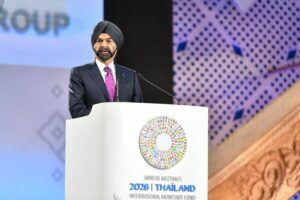
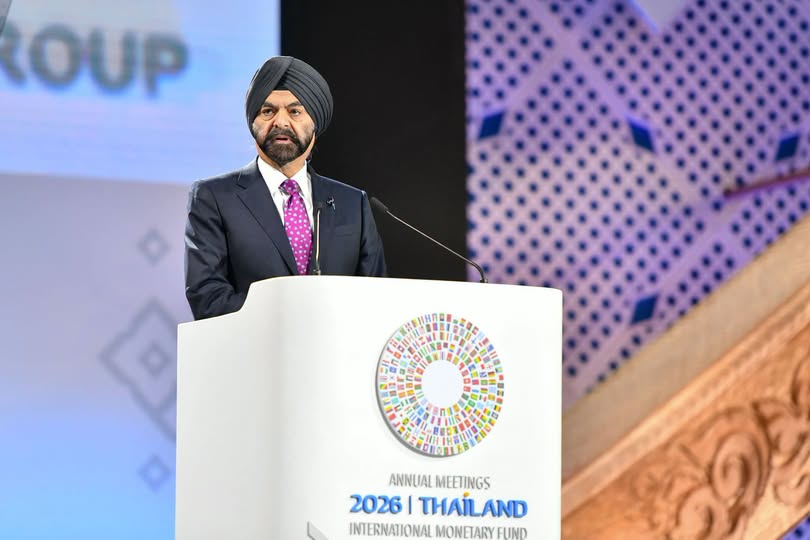
World Bank Group President Ajay Banga has warned that developing economies face a projected shortfall of about 800 million jobs over the next 10 to 15 years, urging governments and development partners to mobilise private investment, expand infrastructure and support businesses to create employment opportunities at scale.
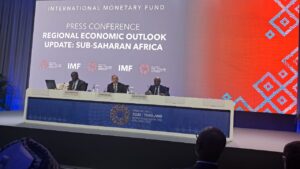
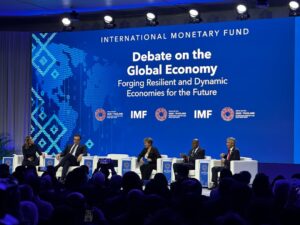
Banga, who spoke at the 2026 IMF-World Bank Group Annual Meetings in Bangkok, Thailand, said about 1.2 billion young people would enter the labour market during the period, while developing economies were projected to generate only about 400 million jobs.
He described the looming employment gap as a major development challenge, warning that failure to provide opportunities for young people could have consequences beyond national borders.
“A job is not a statistic. A job is dignity. It is the difference between a young person who can build the future and a young person who is merely awaiting one,” he said.
Banga said the World Bank Group was pursuing a development model that combines public and concessional financing, private investment, philanthropy and technology to help countries create jobs while making scarce resources go further.
He explained that the strategy focuses on building physical and human infrastructure, strengthening regulatory frameworks and reducing investment risks to attract private capital into productive sectors.
According to him, the World Bank Group mobilised $112 billion in private capital in the last fiscal year, up from approximately $35 billion in the 2022 fiscal year, while total financing exceeded $230 billion.
He said the increase reflected efforts to deploy guarantees, equity financing and local currency financing to address barriers that discourage private investors from entering developing markets.
However, Banga acknowledged that attracting commercial investment remained difficult in low income and fragile economies, where private capital mobilisation had remained largely flat despite improvements in other regions.
He said the Bank’s strategy was designed to address these challenges by strengthening infrastructure, improving access to finance for micro, small and medium sized enterprises, and supporting reforms that make businesses more competitive.
Banga also highlighted the role of technology, particularly artificial intelligence, in improving productivity and expanding economic opportunities.
He said practical AI applications could help farmers improve yields, teachers tailor instruction, health workers make better-informed decisions and entrepreneurs reach new customers.
However, he stressed that developing countries needed electricity, digital connectivity, appropriate skills and safeguards to benefit from the technology.
The World Bank president also outlined initiatives targeting access to electricity, water security, agricultural productivity and affordable healthcare, saying these investments were essential to creating productive jobs and improving living standards.
He said the institution was working with partners to expand electricity access to 300 million people in Africa by 2030, improve water security for up to one billion people and support 300 million smallholder farmers in moving from subsistence production to surplus.
Banga maintained that development financing must be increasingly structured to attract long-term private investment, allowing multilateral development banks to free up capital for additional projects rather than having funds tied up in infrastructure investments for decades.
He said the ultimate objective was to build a development system capable of generating investment, expanding economic opportunities and creating jobs on a scale commensurate with the needs of the next generation.
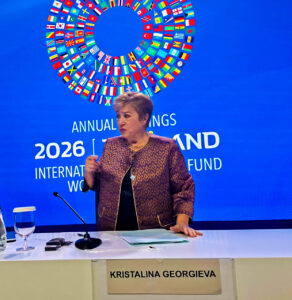
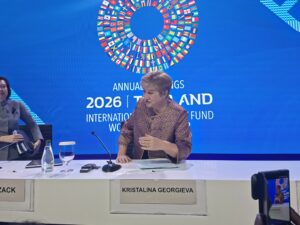
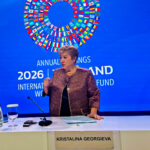
The warning came as International Monetary Fund Managing Director Kristalina Georgieva cautioned that rising public debt, energy supply disruptions, inflationary pressures and geopolitical tensions were putting the global economy under increasing strain.
Georgieva said the global economy had remained resilient despite repeated shocks, with the IMF maintaining its global growth forecast at 3.1 per cent for the year.
However, she warned that the stability masked significant differences between countries, with economies exposed to conflict suffering downgrades while those integrated into the artificial intelligence supply chain recorded stronger prospects.
She said the energy shock was weighing on growth while the AI boom was supporting economic activity, but warned that the technology was also generating substantial infrastructure needs and adding to short-term inflationary pressures.
According to her, rising debt and borrowing costs were reducing governments’ capacity to respond to economic shocks, while high interest payments were crowding out development spending in poorer countries already facing declining official aid.
Georgieva said governments with high debt levels could not rely on economic growth alone to reverse worsening debt trajectories, stressing the need for credible medium-term fiscal plans and, in some cases, immediate measures to reduce deficits.
“The inescapable bottom line is that preserving stability requires fiscal consolidation in most high-debt countries,” she said.
She also urged central banks to remain focused on price stability, arguing that timely action against inflation was preferable to delaying intervention and having to implement larger interest-rate increases later.
Georgieva called for stronger international cooperation to address fiscal and economic imbalances, strengthen financial systems and manage emerging risks from artificial intelligence, particularly cybersecurity threats.
She said the IMF would continue supporting member countries through lending, technical assistance and policy advice, including concessional financing for low-income economies.
The IMF chief stressed that protecting vulnerable populations while implementing fiscal reforms and strengthening the foundations for sustainable growth would be essential to navigating the uncertain global economic environment.
Good production costs money and you can support what we do. Please find our details below👇🏾👇🏾👇🏾 Account name: MARKET ONLINE MEDIA Bank: UBA Acc No: 1026401930.