









Barbara Bako, Bangkok.
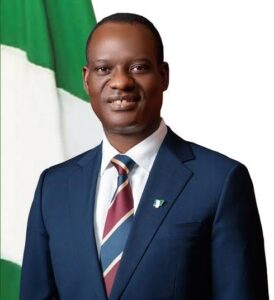
Oyedele has urged local and international investors to channel patient capital into Africa’s food security and infrastructure sectors, saying the continent needs investment-ready projects, predictable policies and stronger partnerships to translate its economic potential into jobs and shared prosperity.
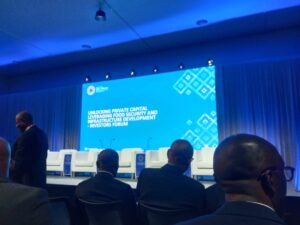
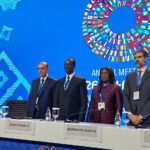
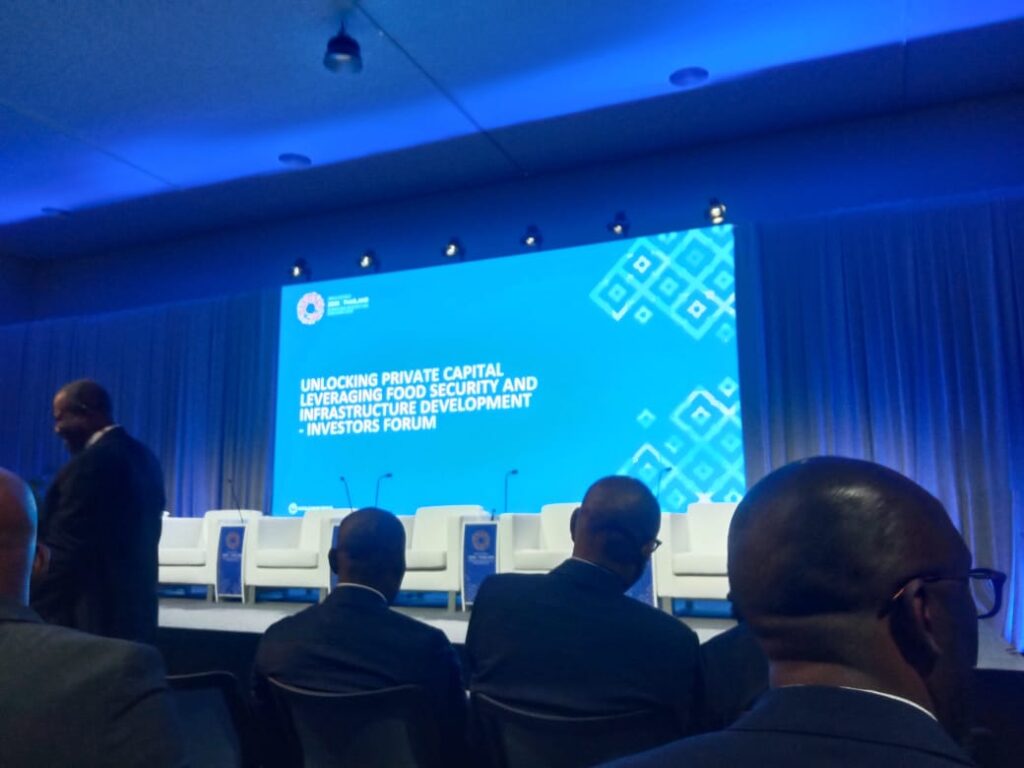
Oyedele made the call at the Investors Forum on Unlocking Private Capital: Leveraging Food Security and Infrastructure Development, where he presented Nigeria’s economic reforms as part of efforts to attract private investment and build a more competitive economy.
He said Africa had significant opportunities for investment but needed to move beyond promoting its potential to establishing clear pathways through which investors could identify projects, understand the applicable rules and commit capital with confidence.
According to him, the continent requires a deep pipeline of bankable projects capable of generating sustainable returns while addressing critical development needs.
“Capital has no passports; it goes where it is treated well and stays where it is treated fairly,” Oyedele said, stressing that investors needed clarity, policy consistency and confidence that the rules governing their investments would remain predictable.
Using Nigeria as a case study, he said the country’s economic reforms were designed to address longstanding structural weaknesses and establish a stronger foundation for sustainable growth.
Oyedele argued that policies aimed at keeping prices artificially low through subsidies and price controls had often distorted markets without guaranteeing the availability of goods and services.
He said governments should instead focus on allowing markets to function under responsible regulation while creating conditions for improved incomes, increased productivity and investment.
He acknowledged that significant challenges remained, particularly in the electricity sector, where pricing arrangements continued to affect the bankability of investments.
Oyedele, however, said recognising these challenges was necessary to developing lasting solutions and creating an environment in which private capital could support economic transformation.
He identified food security and infrastructure as interconnected investment priorities, arguing that agricultural production could not deliver its full economic benefits without adequate storage, processing, transportation and market access.
He noted that Africa possessed substantial agricultural potential but continued to rely heavily on food imports, describing the gap between the continent’s resources and its food production capacity as a significant opportunity for investors.
According to him, investment opportunities exist across agricultural value chains, from seeds and irrigation to warehousing, cold-chain facilities, processing and distribution.
Oyedele cited tomato production in Nigeria to illustrate the scale of the challenge, noting that significant quantities of produce could be lost because of inadequate storage and processing facilities, while farmers incurred additional costs transporting fresh produce over long distances.
He said such inefficiencies demonstrated why investment in agriculture must be accompanied by reliable infrastructure capable of connecting farms to markets.
He also highlighted the African Continental Free Trade Area as an opportunity to expand national markets into a more integrated regional economy, enabling businesses to grow and serve a larger customer base.
Oyedele said investments in roads, warehouses and other essential infrastructure could help reduce food losses and transportation costs, improve market access and ease food inflation, benefiting both producers and consumers.
On Nigeria’s investment outlook, Oyedele said the government was working to provide greater policy predictability, clearer rules and stronger institutions to encourage domestic and foreign investment.
He stressed that investors were concerned not simply about taxation but also about uncertainty surrounding policies and regulations.
He said Nigeria was anchoring its reforms in laws and institutions to improve their durability, while working with development partners to strengthen risk-sharing arrangements and deepen domestic capital markets.
Oyedele also called on African investors to demonstrate confidence in their economies by investing alongside international partners.
He urged investors to bring patient capital and work with African businesses to develop projects that would deliver measurable economic benefits.
“We are not selling you promises; we are selling you results,” he said, challenging investors to assess Nigeria’s progress and examine the opportunities available.
He added that the success of investment initiatives should be measured by completed transactions, commercialised farms, food delivered and jobs created rather than announcements and commitments alone.
Oyedele invited participants to a Nigeria investor presentation scheduled for the following day, where project opportunities, financing structures and investor protections would be outlined.
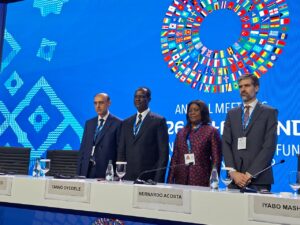
Also speaking at the forum, Zainab Shamsuna Ahmed, Executive Director for EDS25 – Africa Group 3 Constituency of the World Bank Group called for practical steps to turn investor interest into bankable projects, credible partnerships and measurable development outcomes.
Ahmed said food security and productive infrastructure were central to economic diversification, competitiveness, resilience and job creation, stressing that agricultural value chains depended on complementary investments in energy, transport, digital connectivity and logistics.
She urged governments to establish clear investment priorities, address regulatory uncertainty and remove implementation constraints that could undermine investor confidence.
According to her, transparent frameworks, effective institutions, credible project preparation and appropriate incentives were essential to reducing transaction costs and attracting sustainable private capital.
Ahmed also emphasised the need to ensure that local enterprises, farmers, women and young people participated meaningfully in the opportunities created by new investments.
She said the World Bank Group stood ready to support the process through policy engagement, project preparation, International Finance Corporation investment and advisory services, guarantees, lending and other risk-mitigation instruments.
Ahmed urged investors to specify the opportunities they were prepared to pursue, the financing arrangements they required and the conditions necessary to advance projects towards due diligence and financial close.
She said the forum should produce concrete outcomes, including identified investment priorities, clarified investor requirements, designated focal points and time-bound next steps.
The discussions highlighted the need for closer collaboration among governments, development finance institutions, project sponsors and private investors to mobilise capital for commercially viable projects that address Africa’s food security and infrastructure gaps.
Both speakers emphasised that translating investment opportunities into lasting economic gains would depend on credible policies, effective project preparation and a sustained focus on implementation, job creation and shared prosperity.
Good production costs money and you can support what we do. Please find our details below👇🏾👇🏾👇🏾 Account name: MARKET ONLINE MEDIA Bank: UBA Acc No: 1026401930.