









Barbara Bako, Bangkok.
The Intergovernmental Group of Twenty-Four on International Monetary Affairs and Development (G24) has urged the International Monetary Fund (IMF) and the World Bank to make financing more affordable for developing countries, warning that high borrowing costs are constraining growth, job creation and poverty reduction.
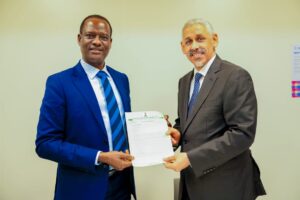
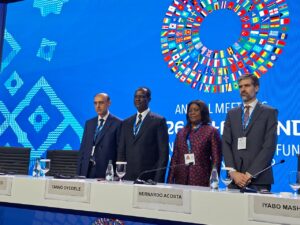
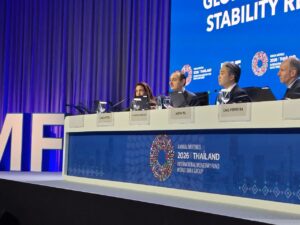
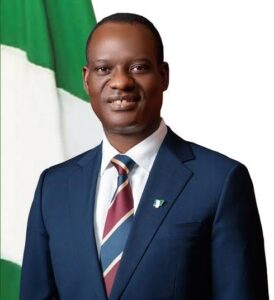
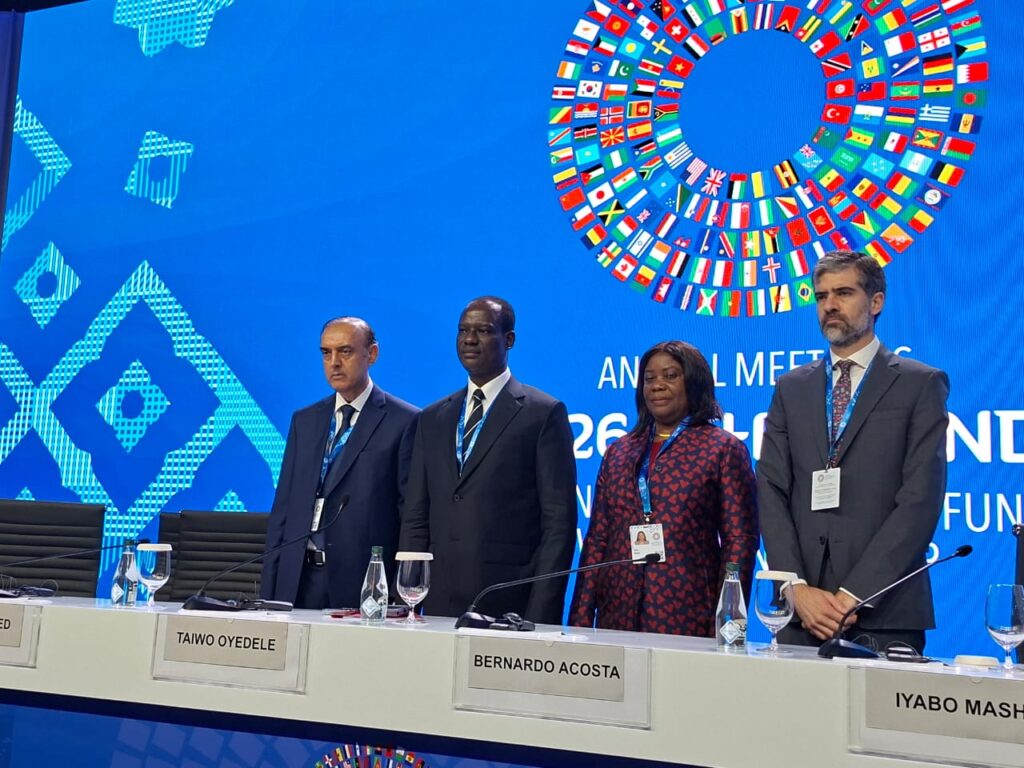
Nigeria’s Finance Minister and G24 Chair, Taiwo Oyedele, made the call at a press briefing during the IMF–World Bank Annual Meetings in Bangkok, Thailand.
He said developing countries, particularly in Africa, faced mounting debt burdens and expensive borrowing, leaving governments with fewer resources for infrastructure, social services and productive investment.
Citing estimates, Oyedele said developing countries pay about $500 billion more in borrowing costs than developed economies.
“Our charge to both the IMF and the World Bank is to find means of making, particularly in the short term, more affordable concessional borrowing available to particularly the vulnerable countries,” he said.
He urged governments to improve revenue mobilisation and identify savings without placing additional tax burdens on vulnerable populations and productive sectors.
He also called for greater private capital mobilisation to free up public resources for essential services.
On employment, Oyedele warned that artificial intelligence (AI) could worsen unemployment in developing countries, especially those with large youth populations, if its adoption was not properly managed.
He stressed that macroeconomic stability must go hand in hand with job creation and inclusive growth.
“It’s not macro stability or job-rich growth. The stability itself is the foundation upon which you can build the growth and the prosperity that you want for your people,” he said.
On climate finance, Oyedele called for stronger international cooperation to help developing economies grow without compromising environmental protection.
He urged stakeholders to deliver at least $300 billion in private climate finance annually by 2035, as referenced in the G24’s discussions.
He also cautioned against trade restrictions that could worsen supply disruptions during climate shocks and called for international tax cooperation to curb profit shifting, tax avoidance and illicit financial flows.
Iyabo Masha, Director and Head of the G24 Secretariat, called for faster debt restructuring, greater private creditor participation and fairer credit-rating assessments to ease the financing pressures facing developing countries.
“We are asking the advanced economies to assist with the credit rating agencies, for example. How do they support the ratings in such a way that it does not penalize developing countries,” she said.
Masha said recent updates to the IMF’s debt sustainability framework, the Global Sovereign Debt Roundtable’s restructuring procedures and the Common Framework could help accelerate debt resolution, although further reforms were needed.
She also highlighted the Borrowers’ Platform as a means for debtor countries to strengthen their collective voice and improve their understanding of sustainable borrowing.
On IMF governance, Masha called for quota reforms that reflect changes in the global economy while protecting the representation of smaller and poorer countries.
“We want to see that a new quota reflects that there are more kids on the block and we can work with that,” she said.
The G24 also called for stronger domestic capital markets, innovative financing and more equitable climate finance to support inclusive and sustainable development.
Good production costs money and you can support what we do. Please find our details below👇🏾👇🏾👇🏾 Account name: MARKET ONLINE MEDIA Bank: UBA Acc No: 1026401930.