









Barbara Bako, Abuja.
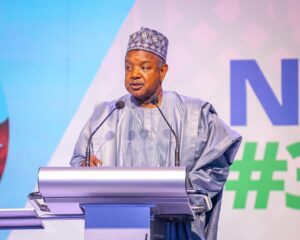
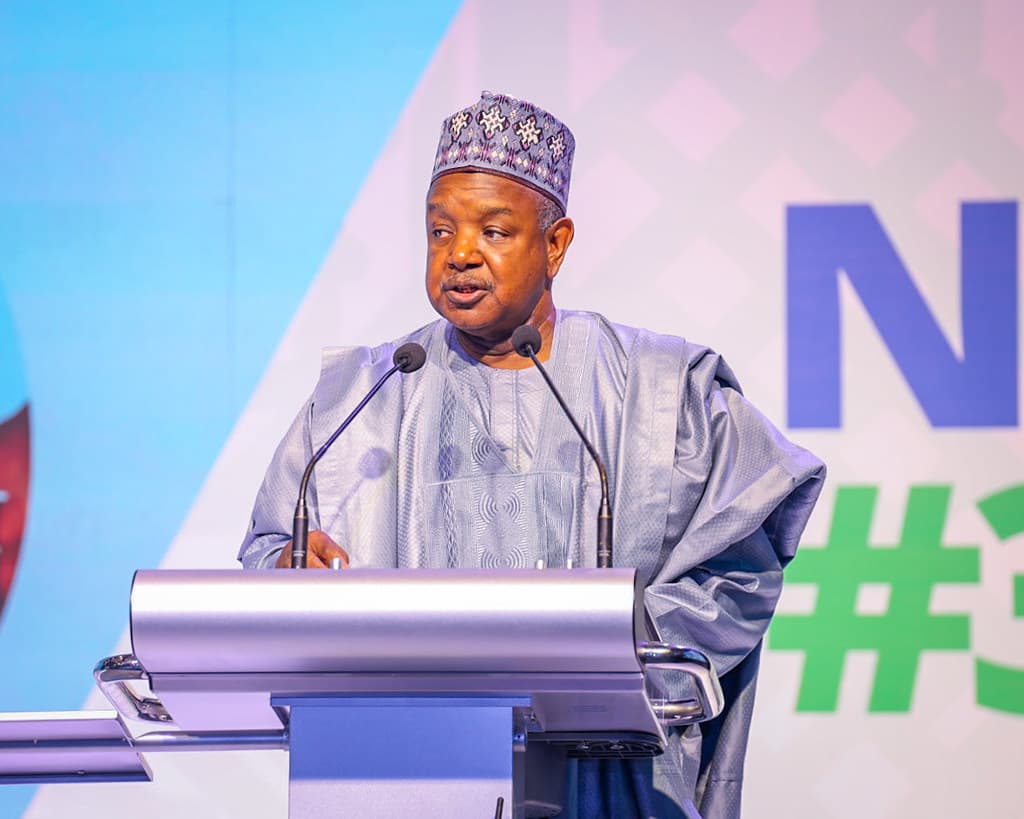
The Minister of Budget and Economic Planning, Sen. Abubakar Atiku Bagudu, has reaffirmed the Federal Government’s ambition to build a $1 trillion economy, while the Nigerian Economic Summit Group (NESG) has called for stronger efforts to translate economic growth into jobs, higher incomes and improved living standards.
Bagudu and the Chairman of NESG, Mr Olaniyi Yusuf, spoke on Monday at the 32nd Nigerian Economic Summit (NES32) in Abuja, themed “Growth That Works: Delivering Jobs, Productivity and Shared Prosperity.”
Bagudu said achieving the $1 trillion economy target would require sustained growth, stronger domestic production and broader participation in productive economic activities.
He said the government remained committed to reforms aimed at stabilising the economy, expanding infrastructure, creating jobs and reducing poverty.
According to him, Nigeria’s economy had recorded positive growth for two consecutive quarters, while inflation and interest rates were declining.
The minister also said revenue allocations to federal, state and local governments had increased, with some states and local governments recording more than fivefold increases in monthly revenue.
He attributed the increase to revenue distribution among the three tiers of government to enable them to meet their constitutional responsibilities.
Bagudu stressed the need for cooperation among the three tiers of government to improve fiscal and monetary policy coordination and strengthen spending on security and infrastructure.
He said the administration was also prioritising grassroots development, skills acquisition, early childhood development and support for small and medium sized enterprises.
The minister disclosed that more than $6 billion had been mobilised from the World Bank and other development partners to strengthen household resilience and expand economic opportunities.
He added that improved agricultural productivity and support for domestic production were essential to creating jobs, raising incomes and improving livelihoods.
Bagudu also underscored the importance of private-sector investment, saying businesses needed confidence in the economy to expand operations, improve productivity and generate employment.
On his part, Yusuf urged the government to ensure that economic reforms translated into tangible benefits for households and businesses, warning that macroeconomic stabilisation alone would not automatically deliver inclusive growth.
“Our responsibility now is to ensure that reforms translate into stronger enterprises, better jobs, more productive workers, rising incomes, improved living standards and shared prosperity,” Yusuf said.
He said measures such as petroleum subsidy removal, foreign exchange reforms, fiscal restructuring and banking sector reforms were necessary to address economic distortions, but stressed that their success should be assessed by their impact on citizens.
Yusuf noted that households continued to face pressure from high food prices, while businesses struggled with rising production costs, unreliable electricity, expensive financing and inadequate infrastructure.
He said slower inflation did not necessarily mean that goods and services had become more affordable, calling for policies that would improve purchasing power and expand economic opportunities.
The NESG chairman identified productivity, human capital development and resilience as priorities for sustainable economic growth.
He called for greater investment in education, healthcare, nutrition and relevant skills, alongside improved infrastructure, predictable regulations, fair competition and an efficient legal system to encourage private investment.
Yusuf cited economic performance figures showing that Nigeria’s real Gross Domestic Product grew by 4.43 per cent year-on-year in the second quarter of 2026, compared with 3.89 per cent in the first quarter.
He, however, expressed concern over persistent food inflation, high production costs and other structural constraints affecting businesses and households.
He identified agriculture, agro-processing, manufacturing, construction, tourism and digital services as sectors with potential to generate productive employment.
Yusuf also called for stronger links between education and industry through technical and vocational training, digital skills and employment-focused learning.
He urged businesses to invest in technology, workforce skills, local supply chains and export competitiveness, while calling on the government to improve infrastructure and regulatory predictability.
The NESG chairman further urged summit participants to develop clear commitments with measurable targets, defined institutional responsibilities and realistic timelines to ensure accountability.
He said the ultimate test of the summit would be whether its deliberations produced tangible improvements for farmers, manufacturers, entrepreneurs and young Nigerians seeking decent jobs.
Good production costs money and you can support what we do. Please find our details below👇🏾👇🏾👇🏾 Account name: MARKET ONLINE MEDIA Bank: UBA Acc No: 1026401930.