










By Barbara Bako
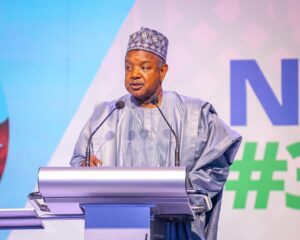
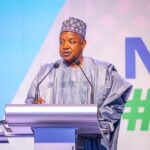
The Minister of State for Industry has said the Federal Government is strengthening support for micro, small and medium enterprises (MSMEs) through tax incentives, free business registration and improved access to financing to boost their contribution to Nigeria’s industrial development.
The minister said MSMEs should be treated as critical players in the country’s industrial value chain, rather than peripheral participants in the economy.
Speaking at an interactive panel on MSMEs and the informal economy organised by the Nigerian Economic Summit Group (NESG), the minister cited estimates showing that MSMEs account for 97 per cent of businesses, about 87 per cent of employers and 50 per cent of gross domestic product (GDP).
He said the government was incorporating MSMEs into the Nigerian Industrial Policy by recognising their role in supplying goods and services to large manufacturers and other major industries.
The minister identified mining and solid minerals, oil and gas, manufacturing, and construction as sectors that could create opportunities for smaller businesses through procurement, contracts and supply-chain linkages.
On formalisation, he said the government should encourage businesses to register by making the process beneficial to them, rather than relying solely on compliance requirements.
He said tax incentives under the new tax framework, which took effect in January 2026, included exemptions for qualifying small companies with annual turnover below ₦100 million.
The minister also said the government had facilitated the free registration of more than 50,000 MSMEs with the Corporate Affairs Commission (CAC), noting that formalisation could help eligible businesses access financing and participate in formal supply chains.
He called for updated data on MSMEs, explaining that existing estimates were based on information collected about five to six years ago.
According to him, a fresh census would provide a clearer picture of the number of businesses operating in the country and their current needs.
The minister identified inadequate electricity supply and limited access to affordable, long-term financing among the constraints affecting business productivity and expansion.
He also stressed the need to connect smaller businesses with large manufacturers to create more reliable markets and supply opportunities.
Representing Katsina State Governor, Dr. Dikko Umar Radda, the state’s Chief Economic Adviser, Malam Khalil Nur Khalil, called for coordinated policies and practical interventions to address the challenges facing MSMEs.
Nur Khalil identified reliable business data, policy alignment, private-sector participation and business environment reforms as essential to developing a functional MSME ecosystem.
He said industrial policies and MSME development strategies needed to be better coordinated across federal, state and local governments to ensure that interventions produced measurable results.
Nur Khalil also called for reforms to reduce the time, cost and procedures involved in obtaining permits, enforcing contracts and resolving business disputes.
He warned against politicising MSME support, saying this could undermine the effective delivery of financing, training, capacity building and infrastructure.
The Group Managing Director and Chief Executive Officer of First Bank of Nigeria, Olusegun Alebiosu, called for better coordination among governments, financial institutions and private-sector business support organisations.
Alebiosu said MSMEs had different financing requirements depending on their size, business model and stage of development, making it necessary to design interventions around their specific needs.
He explained that commercial banks were profit-making institutions and could not be expected to provide all the support required by small businesses through corporate social responsibility programmes.
He said government policies needed to address structural barriers to business growth, including poor transportation networks, limited market access and infrastructure gaps that increased lending risks.
According to him, reducing these risks would improve the viability of businesses and create better conditions for financial institutions to extend credit at lower interest rates.
Alebiosu also highlighted First Bank’s financing programmes for traders and businesses requiring short-term working capital, explaining that some facilities were assessed using account activity and cash-flow performance rather than relying exclusively on conventional collateral.
The Chief Executive Officer of Prothrive Astute Heights Ltd., Oluyemisi Obe, called for more flexible MSME support programmes that respond to businesses’ changing financing needs as they expand.
Obe said interventions should not end with the initial provision of loans or training but should include follow-up assessments to determine whether beneficiaries required additional capital, technical support or market access.
Drawing on her experience in the food-processing industry, she identified the cost of equipment, regulatory approvals, raw materials, packaging, distribution and skilled labour as major constraints facing growing businesses.
She said transportation costs could make it difficult for small producers to distribute goods across the country, while larger companies often had an advantage in securing bulk buyers and attracting skilled employees.
Obe also advocated legislation to protect effective MSME policies from being discontinued whenever a new administration took office.
Meanwhile, Funabashi Gaku, an economist and fellow in Small and Medium Enterprise Development at the Japan International Cooperation Agency, said MSME policies should have clearly defined targets.
Gaku said governments needed to distinguish between economic and social objectives when designing interventions and identify the categories of businesses each programme was intended to support.
Drawing lessons from Japan’s industrial development, he highlighted the importance of selecting strategic industries and strengthening the supply chains supporting them.
The panellists agreed that sustainable MSME development would require coordinated policies, appropriate financing, reliable infrastructure and improved access to markets to help businesses formalise, expand and contribute more effectively to industrial development.
Good production costs money and you can support what we do. Please find our details below👇🏾👇🏾👇🏾 Account name: MARKET ONLINE MEDIA Bank: UBA Acc No: 1026401930.