










Barbara Bako, Abuja.
The World Bank has urged governments across Sub-Saharan Africa to embrace deliberate urban planning and stronger city governance to transform rapid urbanisation into a catalyst for economic growth and job creation, warning that poorly managed expansion could deepen poverty and inequality.
Senior Urban Economist at the World Bank Group, Carlos Mejia, made the call on Thursday while presenting a report titled Sub-Saharan Africa’s Urban Awakening: Catalysing Economic Growth and Job Creation at the 7th Africa Emerging Markets Forum in Abuja.
He said Africa’s urban population is projected to increase by about 85 per cent by 2050, while the physical footprint of its cities will expand by nearly 90 per cent, making it the fastest-urbanising region in the world.
According to Mejia, urban growth is unavoidable, but whether it drives productivity and prosperity depends on policy choices.
“Urban growth is inevitable. Productive urbanisation is a policy choice,” he said.
He explained that the report found cities across Sub-Saharan Africa have weaker job clustering than their counterparts in East and South Asia, limiting productivity because workers, businesses and transport systems remain poorly connected.
“It is not just a density problem; it is also an accessibility problem,” Mejia said, citing long commuting times, fragmented transport systems and weak links between housing and places of work.
He warned that unplanned expansion of city outskirts would lock African countries into higher infrastructure costs and lower productivity for decades, urging governments to invest in transport corridors, planned road networks, serviced urban peripheries and job clusters that attract businesses and create employment.
The economist also called for greater mobilisation of private capital, improved local government capacity and better land use planning to prepare cities for an estimated 50 million new urban jobs needed as urban populations continue to rise.
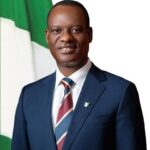
In his remarks, Vice-Chancellor of Ahmadu Bello University, Prof. Adamu Ahmed, said Africa’s challenge was no longer whether urbanisation mattered, but how to make it productive.
He agreed that cities had historically driven economic transformation across the world through trade, innovation and economies of scale, noting that Africa itself had a rich history of prosperous urban centres, including Kano, which flourished as a commercial hub along the Trans-Saharan trade route.
However, he observed that today’s urban growth across much of Africa was largely informal, poorly planned and not accompanied by rising productivity.
“Africa’s current urban awakening appears more of a nightmare than a success story. Yet it is a nightmare with enormous potential,” Ahmed said.
The professor argued that African cities could only fulfil their role as engines of growth if governments introduced stronger urban governance systems, proactive planning and sustained investments in transport and digital infrastructure.
He lamented that many African cities, including those in Nigeria, were expected to drive national economic growth despite lacking adequate governance structures.
“If we expect cities to be the most productive base for growth, then cities must have effective governance through either a mayoral system or a much more improved administrative framework,” he said.
Ahmed also called for integrated policy approaches that combine economic planning, infrastructure, technology, governance and environmental sustainability, saying fragmented interventions would not deliver the productive cities Africa needs.
He stressed that the African Continental Free Trade Area (AfCFTA) would only achieve its full potential if supported by modern transport networks, digital infrastructure and coordinated urban development.
The session formed part of discussions at the 7th Africa Emerging Markets Forum, where policymakers, development experts, academics and private sector leaders examined strategies for building resilient African economies amid growing global economic uncertainty.
Good production costs money and you can support what we do. Please find our details below👇🏾👇🏾👇🏾 Account name: MARKET ONLINE MEDIA Bank: UBA Acc No: 1026401930.