









Barbara Bako, Abuja.
Nigeria’s ambitious financial-sector reforms could be undermined by a growing gap between access q1to financial services and Nigerians’ understanding of how those services work, the Saturday Editor of ThisDay Newspaper, Dr. Obinna Chima, has warned.
Chima said the rapid transformation of Nigeria’s financial system through bank recapitalisation, tax reforms, fintech innovation and artificial intelligence had made accurate and accessible financial reporting increasingly critical to public trust.
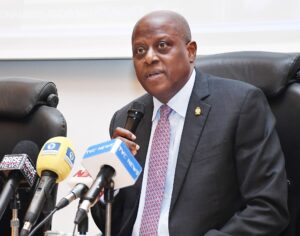
He spoke at the 38th Seminar for Finance Correspondents and Business Editors in Abuja, with the theme, “The Role of the Media in Building a Future-ready Financial System.”
According to him, expanding digital access alone would not guarantee meaningful financial inclusion if consumers lacked the knowledge required to understand increasingly sophisticated financial products, policies and risks.
He said the information gap could become “as dangerous as the financial access gap”, particularly as more Nigerians interact with digital financial platforms.
Chima said financial journalists therefore had a responsibility that went beyond reporting figures, official statements and policy announcements.
He urged reporters to interpret financial developments and explain their implications for businesses, consumers and the wider economy.
“Financial systems depend not only on capital and technology, but also on public trust,” he said.
He described journalists as a bridge between technical financial institutions and Nigerians who may not understand banking, monetary policy and financial markets, urging them to make complex financial issues accessible without compromising accuracy.
Chima also raised concerns about the speed at which misinformation can spread through digital platforms.
While technology has enabled financial news to reach millions of Nigerians almost instantly, he said journalists must ensure that speed does not come at the expense of verification and credibility.
He urged finance correspondents to authenticate documents, independently verify claims, establish reliable sources and ensure that information remains current before publication.
The editor said the media also had a responsibility to scrutinise financial institutions and public-sector agencies as part of its watchdog function, particularly where governance weaknesses could develop into larger financial problems.
He cautioned, however, that journalists must not become alternative regulators or public-relations extensions of financial institutions.
Chima said effective financial journalism required independence, fairness, professional judgment and a strong understanding of the sector.
He called for sustained capacity building for finance journalists, arguing that occasional seminars were no longer sufficient in an industry being reshaped by technology and regulation.
According to him, future-ready financial journalists must understand banking, economics, accounting, data, cybersecurity, artificial intelligence and digital regulation.
He added that reporters should be able to read annual reports, interpret balance sheets, analyse datasets and interrogate regulatory statements.
Chime said artificial intelligence would significantly influence the future of journalism but stressed that technology should complement rather than replace professional judgment.
He said the future of financial journalism would depend on combining technological tools with verification, expertise and editorial responsibility.
Good production costs money and you can support what we do. Please find our details below👇🏾👇🏾👇🏾 Account name: MARKET ONLINE MEDIA Bank: UBA Acc No: 1026401930.