










Barbara Bako, Abuja.
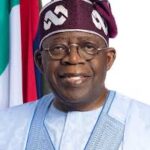
Vice President Kashim Shettima has warned against reversing President Bola Tinubu’s economic reforms for political convenience, urging Nigeria’s political and business leaders to support policy continuity to sustain the country’s economic recovery.
Shettima said the difficult decisions taken by the administration, particularly the removal of fuel subsidies, were necessary to address structural weaknesses in the economy and establish a foundation for long-term growth.
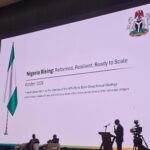
Speaking at the 32nd Nigerian Economic Summit in Abuja, organised by the Nigerian Economic Summit Group (NESG), the Vice President, who represented President Bola Ahmed Tinubu, challenged political leaders and private sector stakeholders to prioritise the country’s economic future over short-term political interests.
“But Mr. President understood that postponing difficult decisions would multiply the eventual cost. He accepted the burden of acting while others calculated the comfort of delay,” he said.
Shettima argued that reversing the reforms would undermine efforts to stabilise the economy, attract investment and create productive employment.
He cited fuel prices in neighbouring countries to defend Nigeria’s current pricing regime, saying policymakers needed to consider the economic implications of returning to the previous subsidy arrangement.
The Vice President also commended former presidential candidate Peter Obi for publicly opposing a return to fuel subsidies despite their political differences.
He maintained that Nigeria needed consistent economic policies that could survive changes in administration, warning that political expediency must not override decisions aimed at securing long-term national prosperity.
Citing improvements in economic growth, capital importation and trade performance, Shettima said the government’s reforms were beginning to produce results.
According to figures presented in his speech, Nigeria’s inflation-adjusted gross domestic product grew by 3.89 per cent in the first quarter of 2026, compared with 3.13 per cent in the corresponding period of 2025.
He also said capital importation reached $10.37 billion in the first quarter of 2026, representing an 83.83 per cent increase over the corresponding period in 2025.
Shettima said the administration would continue to ease regulatory burdens, strengthen transparency and policy predictability, and expand access to finance to encourage investment.
He stressed, however, that economic recovery must translate into better livelihoods, productive jobs and higher incomes for Nigerians.
“We are encouraged by what we have accomplished so far, but we understand that creating jobs is only half the task,” he said.
The Vice President called for increased investment in infrastructure, education, energy, agriculture, manufacturing and solid minerals, arguing that Nigeria must move beyond exporting raw commodities to developing domestic industries and expanding non-oil exports.
In a move aimed at strengthening the policy consistency advocated by Shettima, the Federal Government presented a draft Nigeria Economic Policy Framework for public consultation at the summit.
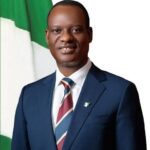
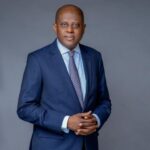
Presenting the proposal, the Minister of Finance and Coordinating Minister of the Economy, Taiwo Oyedele, said Nigeria had produced numerous economic blueprints and reform programmes over the past four decades without establishing an enduring economic philosophy and disciplined implementation framework.
He said frequent policy reversals, inadequate impact assessments and regulations introduced without sufficient consultation had discouraged investment, increased business costs and undermined economic planning.
“Policy uncertainty is an invisible tax on enterprise, and unlike most taxes, it generates no revenue for government. It only destroys value and discourages investment,” Oyedele said.
He explained that the proposed framework was neither a development plan nor the manifesto of any administration, but a national economic doctrine designed to guide government decisions and ensure continuity across successive administrations.
According to him, the framework would organise national economic priorities around seven interconnected areas: stability, productivity, enterprise, capital, people, markets and institutions.
It also proposes mandatory policy impact assessments before major economic interventions, including tax adjustments, tariff changes, regulatory restrictions and incentives, to ensure that decisions are supported by evidence and their potential consequences properly evaluated.
To strengthen accountability, Oyedele said the framework would introduce an annual National Economic Scorecard to track indicators such as real wages, productive employment and poverty.
He stressed that the document remained a consultation draft and had not been approved as government policy.
The minister said public consultation would run until November 27, 2026, with Nigerians invited to respond to 17 core questions through the Federal Ministry of Finance’s website.
Following validation, the document is expected to proceed to the Federal Executive Council for approval and the National Economic Council for endorsement.
Oyedele urged the NESG, business leaders and other stakeholders to scrutinise the proposals and submit evidence based recommendations to help establish a lasting national economic consensus.
“The defining advantage of any great nation is neither the oil under its soil nor the size of its population. It is the capacity to make sound, disciplined decisions and sustain them across generations,” he said.
Good production costs money and you can support what we do. Please find our details below👇🏾👇🏾👇🏾 Account name: MARKET ONLINE MEDIA Bank: UBA Acc No: 1026401930.