










Barbara Bako, Abuja.
The Office of the Tax Ombud (OTO) has pledged to strengthen mechanisms for resolving taxpayers’ complaints over unfair levies, arbitrary assessments and administrative irregularities, as part of efforts to improve transparency and voluntary compliance in Nigeria’s tax system.
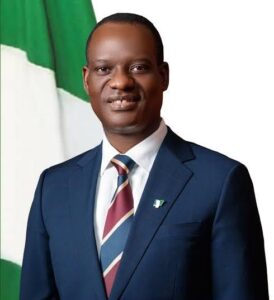
The Tax Ombud/Chief Executive, Dr. John Nwabueze, disclosed this at a stakeholders’ engagement forum in Abuja, with the theme, “Promoting Fairness in Tax and Revenue Administration in Nigeria.”
He outlined measures to protect taxpayers’ rights and make complaint resolution services more accessible, particularly to small businesses, market traders and rural communities.
Nwabueze said the success of Nigeria’s tax reforms, which commenced in January 2026, would depend not only on the quality of the laws but also on their fair and consistent implementation.
“Fairness is not a favour to taxpayers; it is the foundation of public trust and sustainable revenue mobilisation,” he said.
He warned that arbitrary assessments, overlapping levies and inconsistent enforcement could weaken confidence in the tax system, while fair treatment and access to impartial redress would encourage taxpayers to comply voluntarily.
According to him, the Office of the Tax Ombud was established under the Joint Revenue Board of Nigeria (Establishment) Act 2025 to promote lawful, reasonable, transparent and fair administrative processes in tax and revenue administration.
Nwabueze said the Office had made progress in developing a digital complaint-management framework, building stakeholder partnerships, conducting taxpayer education initiatives and establishing a dedicated call centre.
He added that its immediate priorities were to expand access to its services, strengthen operational capacity and ensure that taxpayers understood where to seek assistance when faced with administrative difficulties.
As part of this expansion, the Office is working towards a proposed partnership with the Nigerian Postal Service (NIPOST) to extend its complaint handling and resolution services to market traders and taxpayers in rural communities.
The proposed collaboration is expected to provide additional channels through which taxpayers with limited access to conventional complaint resolution facilities can seek assistance.
Nwabueze also outlined five pillars of fairness that should guide tax administration: equity and proportionality, procedural justice, professionalism and respect, transparency and accountability, and protection of vulnerable taxpayers.
On equity and proportionality, he said tax obligations must be administered consistently, adding that exemptions and reliefs provided by law, particularly for eligible small businesses, must be properly communicated and respected.
He said taxpayers should also have a fair opportunity to present their concerns and receive proper consideration of their complaints, while administrative decisions must be transparent and procedures consistently applied.
The Tax Ombud further disclosed that the Office was advancing a Taxpayer Charter intended to explain taxpayers’ rights and responsibilities in accessible language, including English, Hausa, Igbo, Yoruba and Nigerian Pidgin.
He stressed that protecting vulnerable taxpayers did not mean exempting them from lawful obligations but ensuring that those obligations were administered fairly and without unnecessary barriers.
“Our mandate is to promote administrative processes that are lawful, reasonable, transparent fair, while encouraging conservative dialogue and accountability,” he said.
Nwabueze clarified that the Office was not responsible for making tax policy or cancelling legitimate tax liabilities but was mandated to facilitate the impartial resolution of eligible complaints within its statutory powers.
He commended President Bola Ahmed Tinubu for his commitment to tax reforms under the Renewed Hope Agenda and acknowledged the contributions of the Minister of Finance and Coordinating Minister of the Economy, Mr Taiwo Oyedele, and other stakeholders.
Speaking on behalf of the Managing Director and Chief Executive Officer of Abuja Markets Management Limited, Onya Ojiji, the company’s Head of Finance and Accounts, Faruk Baffa, said fair revenue administration was particularly important to traders and small businesses operating in markets across the Federal Capital Territory.
Baffa identified multiple levies on the same activity, collections without proper receipts, unclear assessment bases and unauthorised agents as practices that could erode traders’ trust and discourage voluntary compliance.
“Where these persist, trust erodes and voluntary compliance falls. Where clarity, receipting and accountability prevail, compliance rises naturally,” he said.
He said Abuja Markets Management Limited would support the Office of the Tax Ombud by sensitising market leaders and traders about their rights and obligations, explaining how complaints could be lodged and collaborating with relevant revenue authorities to discourage multiple and unauthorised levies.
Baffa also pledged that the company would serve as a feedback channel for communicating the practical concerns of market communities to the Office.
“Experience and research both show that taxpayers do not resist taxes so much as they resist unfairness, uncertainty and the absence of visible value,” he said.
He added that a revenue system that listens to taxpayers, explains its decisions and corrects administrative shortcomings would improve compliance at a lower cost while strengthening public confidence.
Participants at the forum, including professional bodies, the private sector, civil society organisations, road transport unions and airline operators, called for streamlined administrative procedures, clearer assessment criteria and more effective channels for resolving disputes.
Good production costs money and you can support what we do. Please find our details below👇🏾👇🏾👇🏾 Account name: MARKET ONLINE MEDIA Bank: UBA Acc No: 1026401930.