









Barbara Bako, Abuja
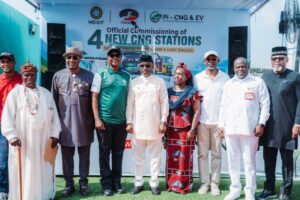
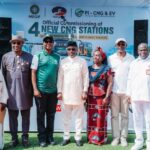
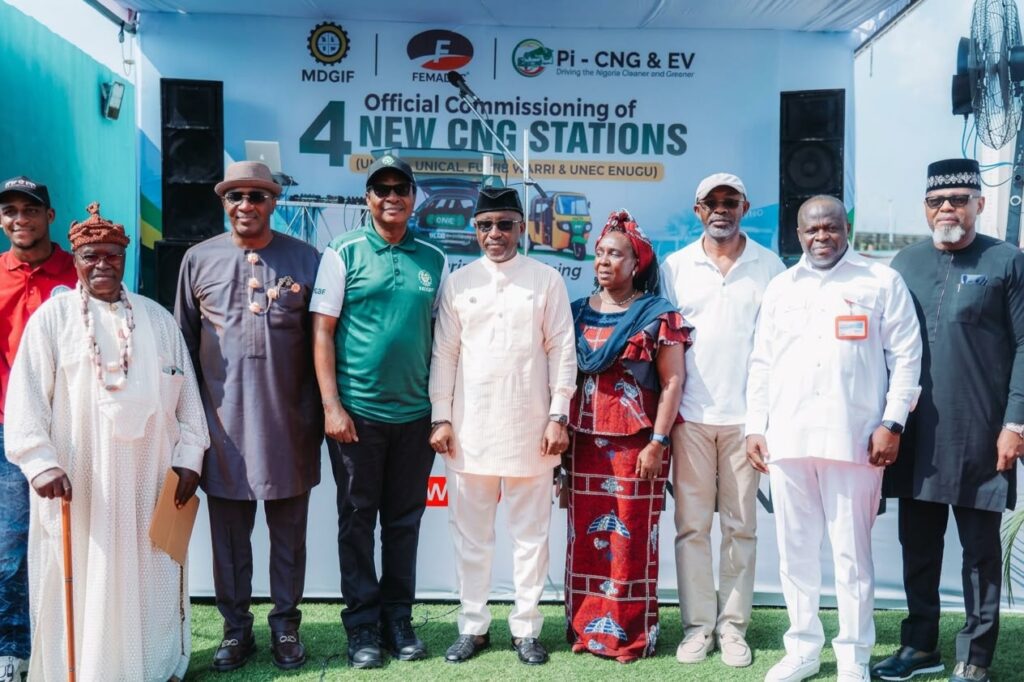
The Federal Government has commissioned four Compressed Natural Gas (CNG) refuelling stations in four Nigerian universities, in a move aimed at reducing transportation costs, expanding access to cleaner energy and strengthening domestic gas utilisation.
The stations, developed by FEMADEC Energy Limited in partnership with the Midstream and Downstream Gas Infrastructure Fund (MDGIF) and the Presidential Initiative on Compressed Natural Gas and Electric Vehicles (Pi-CNG & EV), are located at the University of Uyo, Akwa Ibom State; University of Calabar, Cross River State; University of Nigeria, Enugu Campus; and the Federal University of Petroleum Resources, Effurun, Delta State.
The commissioning took place simultaneously, with the University of Uyo hosting the physical ceremony while the other three facilities were commissioned virtually.
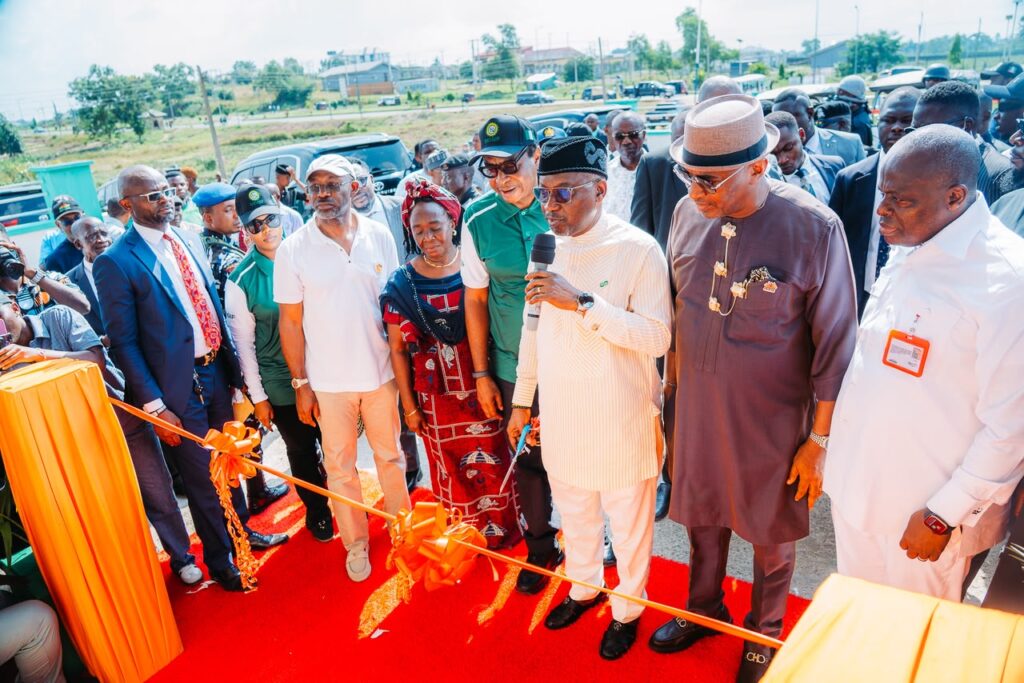
Speaking at the event, the Minister of State for Petroleum Resources (Gas), Ekperikpe Ekpo, said the facilities would provide students, lecturers, university staff and surrounding communities with access to cleaner and potentially more economical transportation alternatives.
Ekpo said the initiative was part of the Federal Government’s efforts to translate Nigeria’s abundant natural gas resources into tangible economic and social benefits.
He noted that Nigeria had over 215 trillion cubic feet of proven natural gas reserves, stressing the need to harness the resource to improve livelihoods, promote industrial development, create employment and expand energy access.
According to him, the administration of President Bola Tinubu, through the Presidential Initiative on CNG and Electric Vehicles, had established hundreds of CNG conversion centres and more than 100 refuelling stations nationwide, with a target of over 1,000 stations.
He added that the initiative had attracted more than $2 billion in private investment, trained thousands of technicians and created over 10,000 jobs.
The minister also highlighted the Special Palliative Relief on University Transportation (SPROUT) Programme, approved to cushion the impact of petroleum subsidy reforms on students and university staff.
Ekpo said the university-based stations would go beyond fuel dispensing by providing opportunities for research, technical training and skills development in CNG technologies.
He urged university managements to collaborate with industry stakeholders to develop local expertise, while calling on operators to maintain high standards of safety and reliability.
The Executive Director of MDGIF, Oluwole Adama, said the four facilities represented an important step in expanding Nigeria’s gas infrastructure and making the country’s natural resources work for its citizens.
Adama disclosed that the mobile integrated unit and storage skid at the facilities had a combined capacity of 8,100 standard cubic metres of gas, sufficient to fuel approximately 540 vehicles daily.
He explained that the infrastructure would support transportation around the universities and neighbouring communities, helping students, workers, traders and commercial transport operators reduce their mobility costs.
According to him, the facilities could also serve as practical learning centres for students interested in engineering, gas operations, safety and maintenance.
Providing an update on the Fund’s activities, Adama said MDGIF had developed a portfolio of 31 projects comprising 205 infrastructure assets, attracting investments valued at ₦1.6 trillion.
The portfolio, he said, included 20 mother stations responsible for compressing and supplying gas and 160 daughter stations designed to bring gas closer to consumers.
He added that 21 facilities had been commissioned, with seven inaugurated the previous week, while more projects were expected to approach commissioning before the end of the year.
Adama, however, stressed that the success of the projects would depend on safe operations, reliable gas supply, proper maintenance and public confidence.
In his remarks, the Chief Executive Officer of FEMADEC Energy Limited said the commissioning of the four stations demonstrated the importance of collaboration between government institutions and private investors in accelerating Nigeria’s clean mobility transition.
He said expanding refuelling infrastructure was critical to the success of gas-powered transportation, noting that the facilities would address commuting challenges faced by students, lecturers, campus shuttle operators and surrounding communities.
The CEO assured users that the stations had been constructed to meet international safety and engineering standards, adding that the company’s mother-to-daughter supply logistics had been synchronised to ensure reliable gas availability.
He also described the university locations as opportunities to establish practical learning environments where engineering and energy students could gain exposure to gas technologies.
The CEO commended MDGIF and Pi-CNG & EV for their support, saying the collaboration had helped translate the Federal Government’s gas utilisation agenda into operational infrastructure.
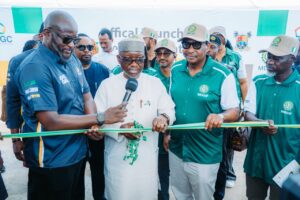
Ekpo formally commissioned the four facilities and expressed hope that they would serve as models for extending CNG infrastructure to more universities and strategic public institutions across the country.
Good production costs money and you can support what we do. Please find our details below👇🏾👇🏾👇🏾 Account name: MARKET ONLINE MEDIA Bank: UBA Acc No: 1026401930.