










Barbara Bako, Abuja.
The Nigerian Economic Summit Group (NESG) has called for urgent reforms to Nigeria’s education system, urging stronger collaboration between government, schools, employers and development partners to equip young people with skills needed for the country’s evolving economy.
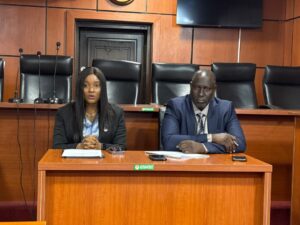
The call came during a pre-summit dialogue on “Future-proofing Nigerian Education,” held in Abuja ahead of the 32nd Nigerian Economic Summit (NES#32).
Stakeholders examined challenges affecting education quality, access, skills development, employability and private-sector participation.
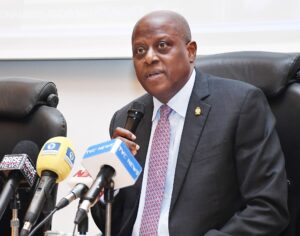
Chair of the NES#32 Central Organising Committee, Ozofu Ogiemudia, said Nigeria must move beyond identifying problems in education and focus on practical, scalable and financeable solutions with measurable commitments.
Also speaking, Oluwatobi Oseni, Lead of the Human Capital Development Thematic Group under NESG’s Community of Practice on Youth (CoPYouth), described Nigeria’s education system as a “broken pipeline” stretching from foundational learning to employment.
He said success should be measured by the skills and capabilities learners acquire, rather than certificates awarded.
During the panel discussion, Dr Moses Sichei, Chief of Social Policy at UNICEF, urged universities to align academic research with industry needs, arguing that postgraduate research should provide evidence-based solutions to real business and policy challenges.
He also advocated embedding entrepreneurship, innovation and digital skills into higher education through mentorships, internships and enterprise incubation.
Vice-Chancellor of the University of Abuja, Prof. Hakeem Babatunde Fawehinmi, called for stronger university-industry partnerships to ensure research generates practical value and supports enterprise development.
He said universities should prepare graduates to create jobs through entrepreneurship, not depend solely on formal employment.
Chikaodi Onyemerela, Director of Programmes and Partnerships at the British Council, stressed the need for universities to strengthen Enterprise Development Centres and demonstrate the impact of research through innovations, inventions and patents.
Representing the Executive Secretary of the Universal Basic Education Commission (UBEC), Hajiya Maryam Sani Rangaji reaffirmed the commission’s commitment to improving access to quality basic education through better infrastructure, teacher development and efforts to reduce the number of out-of-school children.
Participants agreed on priority interventions and stronger private-sector partnerships to improve education outcomes, with recommendations expected to feed into advocacy discussions ahead of NES#32.
The 32nd Nigerian Economic Summit is scheduled for October 26–27, 2026, in Abuja under the theme “Growth that Works: Delivering Jobs, Productivity and Shared Prosperity.”
Good production costs money and you can support what we do. Please find our details below👇🏾👇🏾👇🏾 Account name: MARKET ONLINE MEDIA Bank: UBA Acc No: 1026401930.